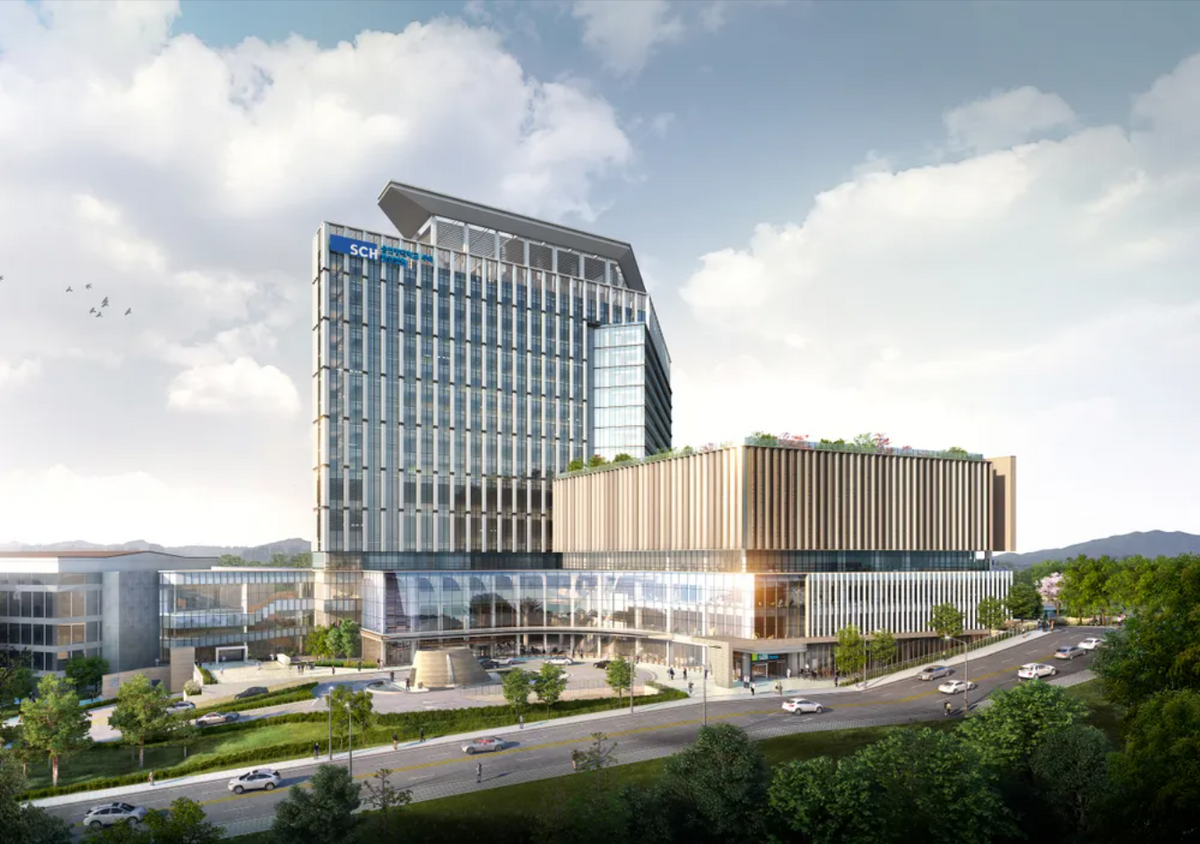
Soonchunhyang University Cheonan Hospital
KR Cheonan, South Korea · multi-specialty
Trust Index 61 · Fair
How this score is built
75% of the score is objective and verifiable; the same public formula applies to every clinic.
Every price shows its source and verification; Price data last updated .
Soonchunhyang University Cheonan Hospital is a private, university-affiliated tertiary (상급종합병원) teaching hospital in Dongnam-gu, Cheonan, South Chungcheong Province, founded in 1982 (as Soonchunhyang Cheonan Hospital) and owned by the Dongeun Educational Foundation. It relocated into a newly built 15-storey, ~1,000-bed-capacity campus in May 2025 (currently operating ~495 beds across 10 wards), and runs a designated regional emergency medical center, a regional cardio-cerebrovascular disease center, and Korea's first nationally designated pediatric emergency medical center.
Verified against: Cheonan campus hospital overview (병원개요) · Cheonan campus history (연혁) · Cheonan campus index / entity confirmation · Soonchunhyang University Medical Center campus list · commons.wikimedia.org · rankings.newsweek.com · google.com
Ask the hospital
Get the exact price for your case from Soonchunhyang University Cheonan Hospital
Your question goes to the hospital's international patient office; the reply lands in your inbox.
Send an inquiry — free- Encrypted
- Free — no obligation
- Your email is never shared with the hospital or third parties
- Patient rating
- 3.6/5
- 109 Google reviews
- Trust Index
- 61/100
- Fair
- Data confidence
- 45%
- Partial · 25% verified
- Founded
- 1982
- 44 yrs
- Published prices
- 3
- from $28
- Specialties
- 3
- departments
Medical Travel Cost Hospital Index
MHI · Method 1.3 Methodology →One comparable score per hospital — each metric below is measured against the registry and weighted by the same public formula. Unsourced metrics are excluded, never guessed.
100% of the formula backed by data
- Trust Index 61 Our index 61/100 · vs 137 same-country hospitals · 25th percentile
- Profile completeness 45 Our index 45% · share of our profile verified vs modeled — informational, not scored
- Quality & reputation 65 ✓ Verified #35 in country (Newsweek/US-News) · 3.6★ Google · objective outcomes ≫ independent ranking ≫ patient reviews · 85th percentile
- Accreditation 71 ✓ Verified 2 independent · current JCI ≫ independent bodies (Magnet/CAP/DNV) ≫ historical/on-record
- Price transparency 30 Imported 3 published · separate pricing axis — informational, not scored in the quality grade
- Scale 75 ✓ Verified 495 beds · vs 84 sourced hospitals in the registry · 49th percentile
The composite is the weight-normalized mean of available metrics. The same method applies to every hospital in the registry. Machine-readable version below for models & crawlers.
Prices by field
Imported — unverifiedThe hospital's published procedure prices, grouped by field — open any row to see what's in the price. Room rates and packages are listed separately below.
Manual Therapy ₩41,500–₩41,500 · from $28 Directory data unverified
- Surgeon & operating room$5
- Anesthesia$2
- Hospital stay (5 nights)$13
- Implants & materials$6
- Post-op & follow-up$2
Hospital stay ≈ $127/night · 5 nights
Included
- Surgeon, anesthesia & OR fees
- 5 nights' hospital stay
- Standard implants & materials
- Nursing, meals & standard follow-up
Budget on top
- + Flights & airport transfer
- + Hotel before/after admission
- + Visa & travel insurance
- + Take-home medications
- + Physiotherapy / rehab
- + Extended stay if complications arise
LASIK Eye Surgery ₩1,665,800–₩2,498,400 · from $1,120 Directory data unverified
- Surgeon & operating room$375
- Anesthesia$67
- Hospital stay (3 nights)$381
- Implants & materials$209
- Post-op & follow-up$84
Hospital stay ≈ $127/night · 3 nights
Included
- Surgeon, anesthesia & OR fees
- 3 nights' hospital stay
- Standard implants & materials
- Nursing, meals & standard follow-up
Budget on top
- + Flights & airport transfer
- + Hotel before/after admission
- + Visa & travel insurance
- + Take-home medications
- + Physiotherapy / rehab
- + Extended stay if complications arise
Comprehensive Health Screening ₩500,000–₩540,000 · from $335 Directory data unverified
- Surgeon & operating room$88
- Anesthesia$26
- Hospital stay (5 nights)$151
- Implants & materials$44
- Post-op & follow-up$26
Hospital stay ≈ $127/night · 5 nights
Included
- Surgeon, anesthesia & OR fees
- 5 nights' hospital stay
- Standard implants & materials
- Nursing, meals & standard follow-up
Budget on top
- + Flights & airport transfer
- + Hotel before/after admission
- + Visa & travel insurance
- + Take-home medications
- + Physiotherapy / rehab
- + Extended stay if complications arise
Prices are the hospital's published ranges (unverified imports are labelled). The line-item split inside each row is modeled from typical cost structures for this preview — the total is the published price and the hospital-stay line uses the real room rate where known. Actual quotes vary by case & surgeon.
Location & getting here
Verified 2026-07-16Address, neighbourhood, and how long transit and airports take.
31 Suncheonhyang 6-gil, Dongnam-gu, Cheonan-si, Chungcheongnam-do, 31151, South Korea (충청남도 천안시 동남구 순천향6길 31)
Dongnam-gu · Cheonan, South Korea
Getting here
- Bongmyeong 0.2 km · ~2 min (≈, OSM)
- Cheonan 1.4 km · ~3 min (≈, OSM)
Accreditations
Independently verifiableOnly independent, checkable accreditations and rankings — published by the accrediting bodies themselves. Self-reported trade awards are deliberately omitted.
Ministry of Health and Welfare / KOIHA (의료기관평가인증원)
Hospital's own site displays a '보건복지부인증 의료기관' badge and its history log records first obtaining the mark in 2011-05. KOIHA's own accredited-hospital search (koiha.or.kr) is JS-locked and the Korea Consumer Agency directory (consumer.go.kr) is a JS-only SPA unreachable via WebFetch/curl in this environment, so this could not be directory-verified this session — not directory-verified.
Ministry of Health and Welfare
Hospital's own history page records '2020-12 제4기 상급종합병원 지정' — a national MOHW tertiary-hospital tier designation (distinct from KOIHA/JCI accreditation).
Newsweek / Statista
#35 in South Korea (listed as "SoonChunHyang University Hospital - Cheonan")
Independent signals
SourcedGovernment quality-inspection grades, independent accreditation/certification, and insurer networks — matched from public registries, not submitted by the hospital.
Conditions treated here
This hospitalSoonchunhyang University Cheonan Hospital treats 27 conditions across 2 fields. What it covers — tap a field for this hospital's own prices.
Achilles Tendinitis · ACL Injury (Torn Knee Ligament) · Bunion (Hallux Valgus) · Carpal tunnel syndrome · Frozen Shoulder (Adhesive Capsulitis) · Gout · Osteoarthritis · Osteoporosis · Plantar Fasciitis · Rheumatoid arthritis · Sciatica · Scoliosis · Spinal cord injury · Spinal stenosis · Temporomandibular joint disorder (TMJ) · Tennis Elbow (Lateral Epicondylitis)
Age-Related Macular Degeneration · Cataracts · Diabetic Retinopathy · Dry Eye Disease · Glaucoma · Keratoconus · Pterygium (Surfer's Eye) · Ptosis (Drooping Eyelid) · Refractive Error (Myopia, Astigmatism) · Retinal detachment · Strabismus (Crossed Eyes)
A directory of fields this hospital covers — not a claim it treats every case. Suitability is confirmed with the specialist.
Specialists & departments
This hospital3 specialties across 3 fields. Tap a field for this hospital's prices.
Ophthalmologist
Orthopedic Surgeon
General Practitioner
Doctor types, never named individuals.
Compare hospitals in South Korea
Our indexSide by side on what actually decides the choice — our grade, the Newsweek ranking, patient reviews, accreditation, and real verified prices. Best in each row marked ★.
Compared with 3 other South Korea hospitals here, Soonchunhyang University Cheonan Hospital carries a BB grade (#35 in South — World's Best Hospitals 2026), ranks #4 of 4 on our merit score (64).
| Metric | This hospital Soonchunhyang University Cheonan Hospital Cheonan | Samsung Medical Center Seoul | Asan Medical Center Seoul | Severance Hospital (Yonsei University) Seoul |
|---|---|---|---|---|
| Hospital gradeNewsweek in-country rank where ranked, else our merit score | BB · 64 | AAA · 93 ★ | AA · 91 | AA · 87 |
| Newsweek rankWorld's Best Hospitals | #35 in country | #1 in country ★ | #2 in country | #3 in country |
| Patient ratingGoogle, sourced | 3.6★ | 3.9★ | 4.0★ ★ | 3.8★ |
| Accreditationindependent bodies | 2 independent ★ | JCI | JCI | JCI |
| Published pricesverified, comparable | — | 6 verified | 7 verified ★ | 2 verified |
| From pricecheapest verified | — | $94 ★ | $154 | $409 |
| Profile | You're here | Open profile | Open profile | Open profile |
Six decision metrics on the same public formula — our grade, the Newsweek ranking, patient reviews, accreditation and real verified prices. "—" means not yet sourced, never guessed. Best in each row marked ★. All hospitals →
Common questions about Soonchunhyang University Cheonan Hospital
Straight answers from the data on this page — cost, accreditation, rating, and location.
How much does treatment at Soonchunhyang University Cheonan Hospital cost?
Soonchunhyang University Cheonan Hospital publishes prices for 3 procedures, starting from about $28. The exact cost depends on the procedure and your case — priced fields include orthopedics, eye care (ophthalmology), general procedures. Every price on this page links to its source and shows whether it is verified.
Is Soonchunhyang University Cheonan Hospital accredited?
Yes — Soonchunhyang University Cheonan Hospital holds MOHW Medical Institution Accreditation (의료기관 인증, administered by KOIHA), 상급종합병원 (Tertiary/Advanced General Hospital), 4th designation cycle. We list only independent, checkable accreditations published by the accrediting bodies themselves; self-reported trade or marketing awards are excluded.
How is Soonchunhyang University Cheonan Hospital rated?
Soonchunhyang University Cheonan Hospital has a 3.6-star Google rating from 109 reviews, and scores 66/100 (grade A) on our independent Trust Index, alongside its rank of #35 in South — World's Best Hospitals 2026. The Trust Index is one public formula applied to every hospital — the
What is Soonchunhyang University Cheonan Hospital known for?
Soonchunhyang University Cheonan Hospital is a private, university-affiliated tertiary (상급종합병원) teaching hospital in Dongnam-gu, Cheonan, South Chungcheong Province, founded in 1982 (as Soonchunhyang Cheonan Hospital) and owned by the Dongeun Educational Foundation. It relocated into a newly built 15-storey, ~1,000-bed-capacity campus in May 2025 (currently operating ~495 beds across 10 wards), and runs a designated regional emergency medical center, a regional cardio-cerebrovascular disease center, and Korea's first nationally designated pediatric emergency medical center.
Where is Soonchunhyang University Cheonan Hospital?
Soonchunhyang University Cheonan Hospital is located at 31 Suncheonhyang 6-gil, Dongnam-gu, Cheonan-si, Chungcheongnam-do, 31151, South Korea (충청남도 천안시 동남구 순천향6길 31), Dongnam-gu, Cheonan, South Korea.
Traveling to Cheonan, South Korea
Sourced Full South Korea guide →South Korea crossed the 1-million mark as a medical-travel destination for the first time in 2024: about 1.17 million foreign patients were treated, up 93.2% from 610,000 in 2023 (Ministry of Health and Welfare / KHIDI). The largest patient groups came from Japan, China, the United States, Thailand and Taiwan, and the most-used specialties were dermatology, plastic surgery, internal/general medicine and health screening. Seoul concentrates most volume, drawing patients for aesthetic and dermatologic care, health check-ups, oncology and advanced surgery delivered in JCI-accredited hospitals with dedicated international-patient centers — at prices below the US while the government regulates and publishes standards through KHIDI's Medical Korea program.
- Visa
- Most Western nationalities (US, UK, EU/Schengen, Australia, Canada, New Zealand, Japan) enter visa-free for short medical or tourist visits. The K-ETA (electronic travel authorization) requirement is temporarily WAIVED for 67 countries and territories through 31 December 2026 — eligible travellers enter without applying for a K-ETA; the requirement is expected to resume 1 January 2027. Confirm your nationality's current rule before travelling.
- Medical / long-stay visa
- For treatment, foreign patients typically use the C-3-3 medical tourism visa (short-term, stays up to 90 days, generally not extendable beyond 90 days except in special circumstances). For treatment or recovery longer than 90 days, patients change to or apply for the G-1-10 long-term medical treatment visa, which can be extended inside Korea; it requires hospital documentation (medical opinion, treatment schedule, payment records). Applications must be tied to a medical institution registered with KTO/KHIDI.
- Arrival
- From 1 January 2026, all foreign arrivals must file the mandatory digital e-Arrival Card online (within 3 days before arrival) — it replaces the paper disembarkation card and is a declaration, not a visa. Travellers who hold an approved K-ETA are exempt from the arrival card, but nationals of K-ETA-waived countries (US, UK, EU, Japan, etc.) must still complete the e-Arrival Card.
- Currency
- South Korean Won (KRW, ₩)
- Languages
- Korean; English widely spoken in international-patient centers at major hospitals, with interpreter services in multiple languages
- Safety & recourse
- Very safe for visitors · Established malpractice recourse
General guidance — confirm current rules for your nationality with official sources. Verified against: Korea Immigration — K-ETA temporary exemption extended to 31 Dec 2026 (MOFA/KPMG GMS alert) · Korea e-Arrival Card mandatory from 1 Jan 2026 · Medical Korea — medical visa (C-3-3 / G-1-10), KHIDI · MOHW — Korea attracts 1.17 million foreign patients in 2024.
Data & sources
25% verified Show all dataHow much of this profile is verified data — every section above carries a chip telling you where its numbers come from.
All 16 data fields — what's verified, imported or modeled Show more Hide
- Identity & location ✓ Verified
- Accreditation Not yet collected
- Published prices Imported
- Languages Not yet collected
- Patient reviews ✓ Verified
- Staff & expertise Imported
- Safety & complications Modeled
- Accommodation & rooms Modeled
- Facilities & access Imported
- Insurance & payment Modeled
- Inclusive & accessible care Modeled
- Ownership & governance ✓ Verified
- Volume & outcomes Modeled
- International-patient mix Modeled
- Surgical team depth Modeled
- Specialties & clinical professions ✓ Verified
Every field is tagged by source state. "Verified" = sourced and checked; "Imported" = real data pending re-verification; "Modeled" = deterministic placeholder for this preview; "Not yet collected" = on our roadmap. Confidence feeds the Trust Index and the finder's verified-only filter. Methodology →
Reviews, staff, accreditations, awards, research and inclusive-care figures are aggregated or modeled from published signals for this preview; real registry, outcome and review data replace them before launch. How we model this →